Category: News

  • CONNECT 2022 Schema Therapy Conference

    CONNECT 2022 Schema Therapy Conference

    Published 18 April, 2022

    Our annual International Schema Therapy Conference ‘CONNECT’ went ahead on April 8th.

    We had a blast connecting with some of our favorite schema colleagues who graced us with the latest in creative applications of Schema Therapy.

    As a part of the charity drive for the conference 15% of profits to be donated to the Ukraine Appeal. So far that is $AUD5,000!

    You can still contribute to this effort by purchasing the post-conference stream which comes with 12-months access to all six presentations and all slides/handouts (for a total of 11.5 Hours of CPD. A certificate of completion is issued upon completion too).

    CONNECT 2022 Conference Review

    The conference was co-facilitated by Robert Brockman, who has shared his own learnings here –

    “This was an awesome conference,” says Rob, “and we’re so thrilled to bring talented, creative individuals together from around the world to share their expertise.”

    We opened the conference with Wendy Behary who set a very high standard.

    Read on for Rob’s full account –
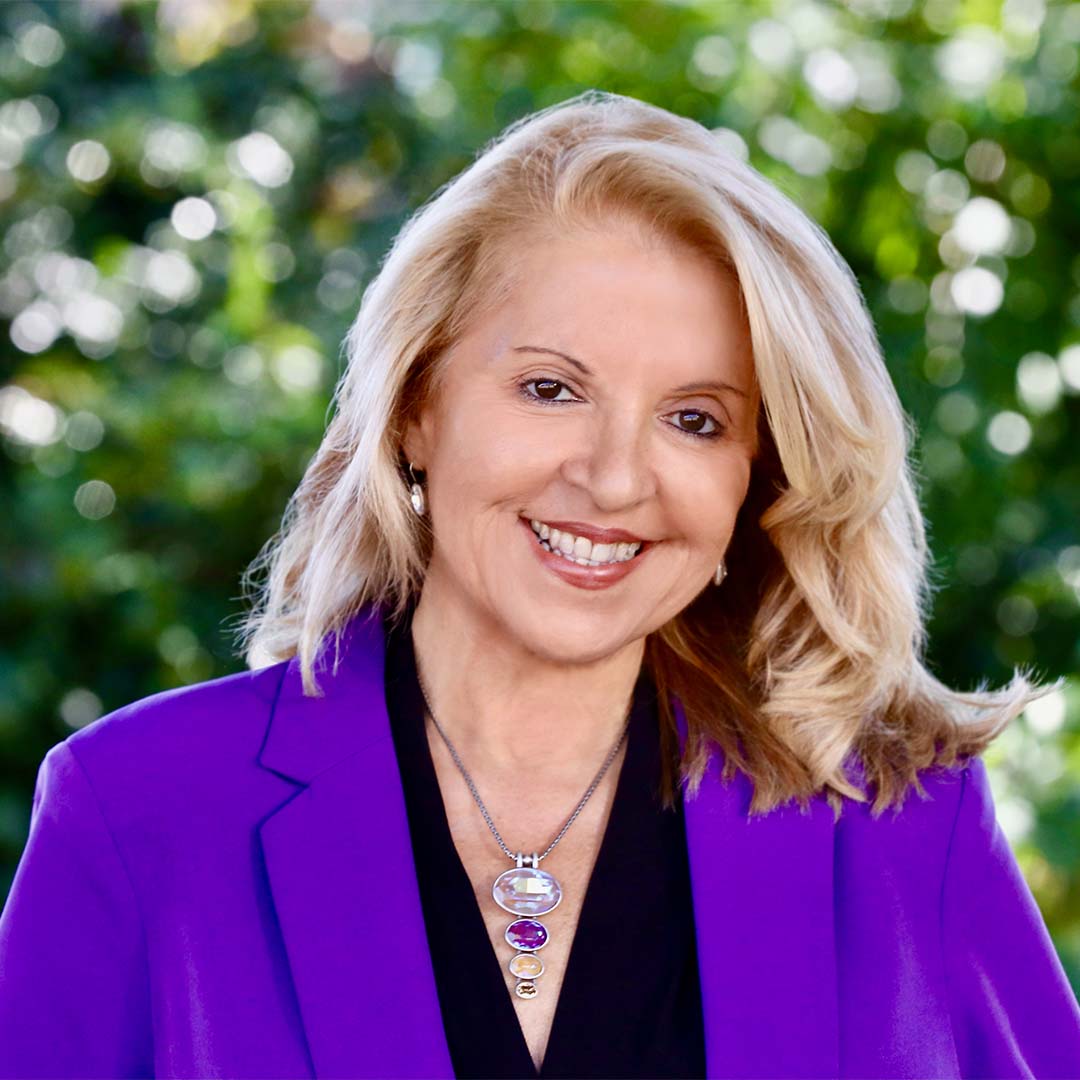
    Wendy Behary

    Presenter: Wendy Behary (USA)

    Presentation: Advanced Empathic Confrontation Strategies for Dealing with The Most Challenging Modes in Treatment

    Wendy graced us with her deeply empathic communication style – and how this is conveyed to soften the most difficult to engage patients. She also presented a real cool ‘Speaking out of frame’ model of interpersonal interactions that can help us stay aware of our own schema based reactions when working with overcompensating clients.

    Presenter: Professor Marleen Rijkboer (Netherlands)

    Presentation: Schema Therapy for Dissociative Identity Disorder; Scientific Background and Practical Overview of the Treatment.

    Marleen presented some theory, and her clinical observations from working over the past few years on a small trial of Schema Therapy for patients suffering with Dissociative Identity Disorder (DID). I came away with an understanding of the relevance of ST to these clients, and the adjustments that need to be made to engage clients with this profile. Marleen has the uncanny ability to describe research and practice in a way that is engaging; her humour and positivity is infectious.

    Presenter: _Dr Susan Simpson (UK)

    Presentation: Working with Self-Flagellation and Guilt in Schema Therapy.

    Presentations involving Self-Flagellation and Guilt are among the most difficult presentations to deal with in ST. Susan was able to share her knowledge of these topics with both precision and empathy, drawing on theory and research from diverse fields to inform her schema approach to these issues.

    Presenter: Dr Lars Madsen (Aust)

    Presentation: The Joker: An introduction to Forensic Schema Therapy.

    Every time I talk to Lars I get the feeling I am on a crime podcast. This was no different (ps. I love crime podcasts). Lars masterfully illustrated the development of a set of Forensic Coping Modes (e.g. Bully and Attack, Predator) based on the tragic history of the character of Joaquin Phoenix’s Joker. Really fun and informative way of teaching the forensic schema model.

    Presenter: Dr Andrew Phipps (Aust)

    Presentation: I Want To Break Free: Accessing and Building the Happy Child Mode in Schema Therapy.

    This was just plain fun – no pun intended;) Andrew took us for a deep dive into some of the skills and knowledge relevant to building the capacity for fun, play, and Joy. I came away from this feeling like we have only scratched the surface of ‘building the happy child’ within the general schema approach.
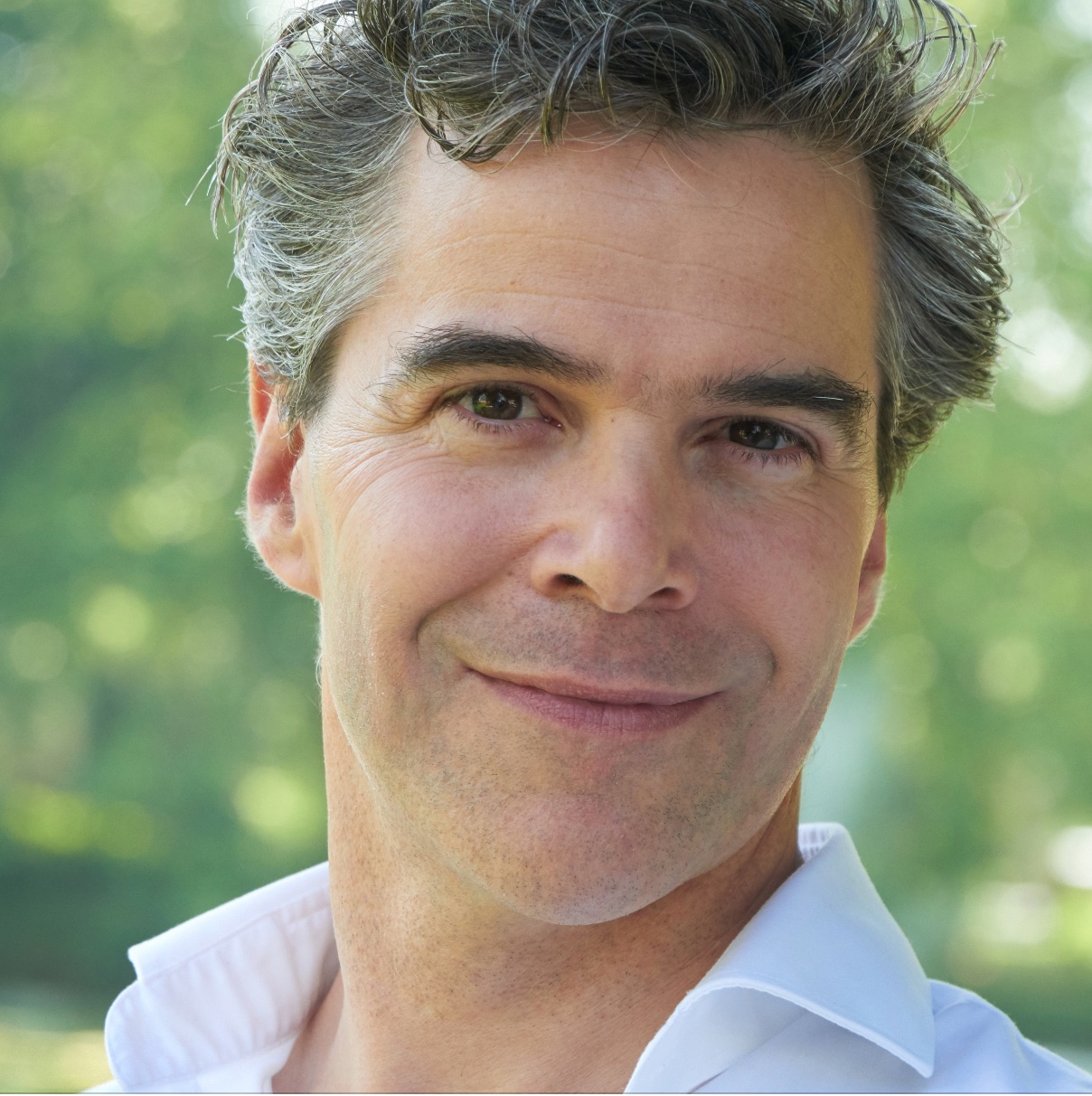
    Remco Van Der Wijngaart (Netherlands) Emotional growth; how to generate corrective emotional experiences in Limited Reparenting.

    Presenter: Remco Van Der Wijngaart (Netherlands)

    Presentation: Emotional growth; how to generate corrective emotional experiences in Limited Reparenting.

    I learn something about ST whenever I talk to Remco. He is so passionate and creative about how to involve the clients in experiential techniques. I was lucky enough to be his role-play ‘Guinea Pig’ for this presentation where he shared a specific framework for limited reparenting (a) Activation (b) Corrective Experience; and (c) Consolidation. I really loved this and have been immediately implementing this in my own ST practice.
  • Free Resources: Healthy Adult

    Free Resources: Healthy Adult

    This is a placeholder for the ‘Free Resources: Healthy Adult’ content. This section will be updated with actual content in the future.

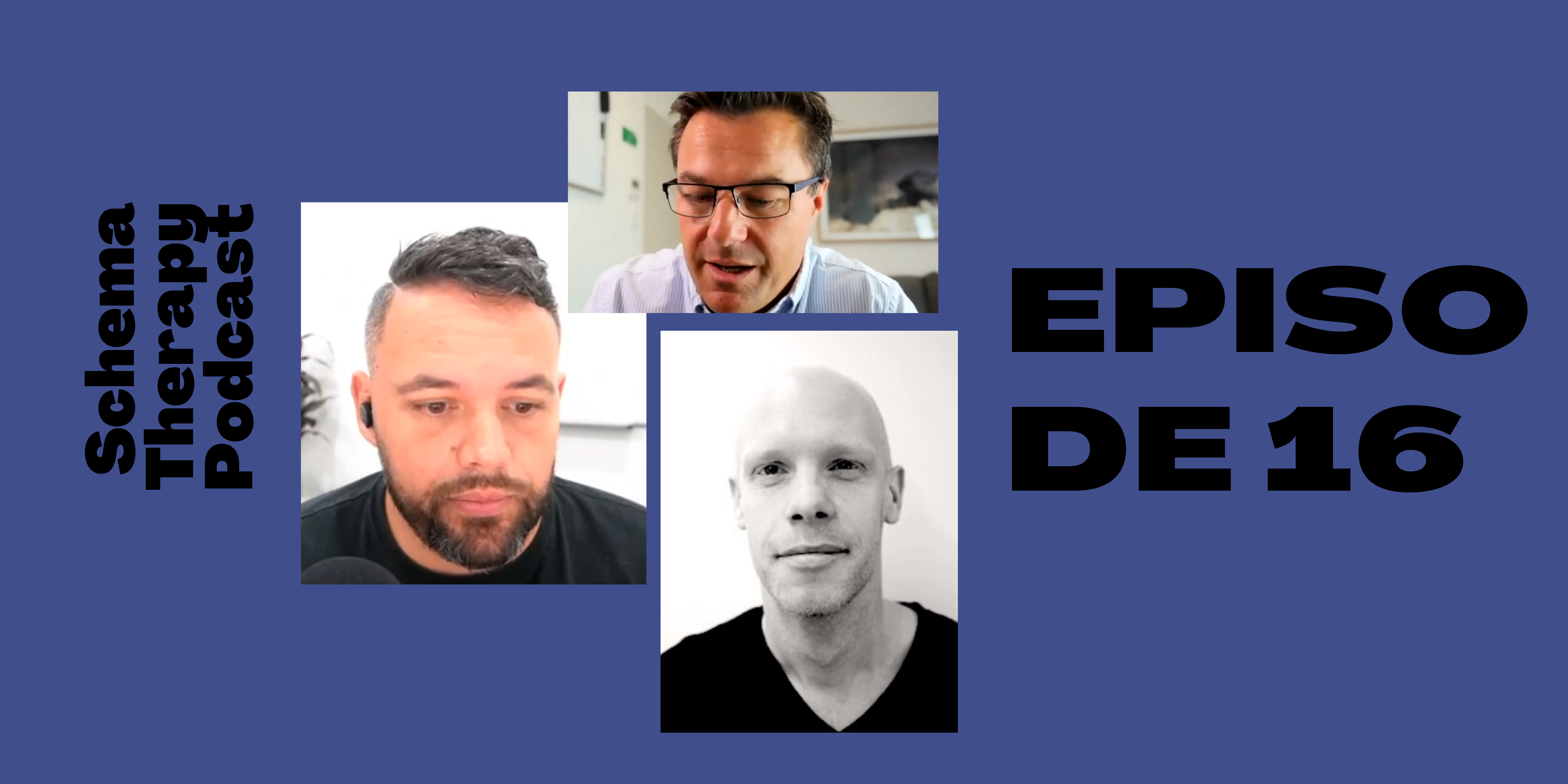
  • Episode 16: Integrating DBT & Schema Therapy with Chris Hepworth & New ISST Case Conceptualization Form

    Can we Be Friends? Integrating DBT to Schema Therapy Chris Hepworth

    These two models – Dialectical Behaviour Therapy and Schema Therapy – can compete against each other. We speak with Chris Hepworth, also known as nickname “Happy,” about his approach.

    From day one, even as a Trainee therapist, he took an interest in these both DBT and Schema Therapy.

    This honest discussion looks at how DBT can regulate clients but in Rob’s experience, leave them with a “core misery”, – which he acknowledges might be unique to him.

    Chris Hayes raises questions about how – and when – to integrate the models.

    Listen in full.

    Free resource | New Schema Therapy Case Conceptualization Form – Approved by the International Society for Schema Therapy (ISST)

    Recently, the ISST (this is the peak international body for schema therapy, and well worth joining;) released an updated Schema Therapy Case Conceptualization Form (Version 2.22) for those pursuing individual accreditation.

    This form is great, and very detailed. If you have not used this form before, we highly recommend it, especially with patients who you may feel stuck with.

    Going back and working on a detailed formulation usually uncovers some blind spots that could blow open the case.

    You can download these below.

    Schema therapy podcast
    https://open.spotify.com/episode/3dOx5rHZCa2fQr8vfQee6f

  • Schema Therapy Courses with CE Units (CEU)

    Schema Therapy Courses with CE Units (CEU)

    We have courses that are now eligible for CE Units (CEU).

    What are CE Units?

    A continuing education unit (CEU) or continuing education credit (CEC) is a measure used in continuing education programs to assist the professional to retain their license. In Australia, this is the equivalent of Continual Professional Development (CPD) points.

    Why do CE Units matter?

    This means our students practicing Schema Therapy in the United States can now complete this coursework and receive acknowledgment of CE Units from bodies who are accredited with CEUnits.com.

    CEUnits.com® is the leading nationally accredited provider of continuing education for healthcare professionals in the United States.

    They are nearing two decades and have delivered more than 50,000 courses to psychologists, social workers, addiction specialists and therapists.

    How to Claim CE Units for your Schema Therapy Course

    Course 1 and Course 2 are both accredited for CE Units.

    Simply complete the courses on this website and then visit CEUnits.com to take a test and claim your points.

  • Free Resources (Updated June 2021)


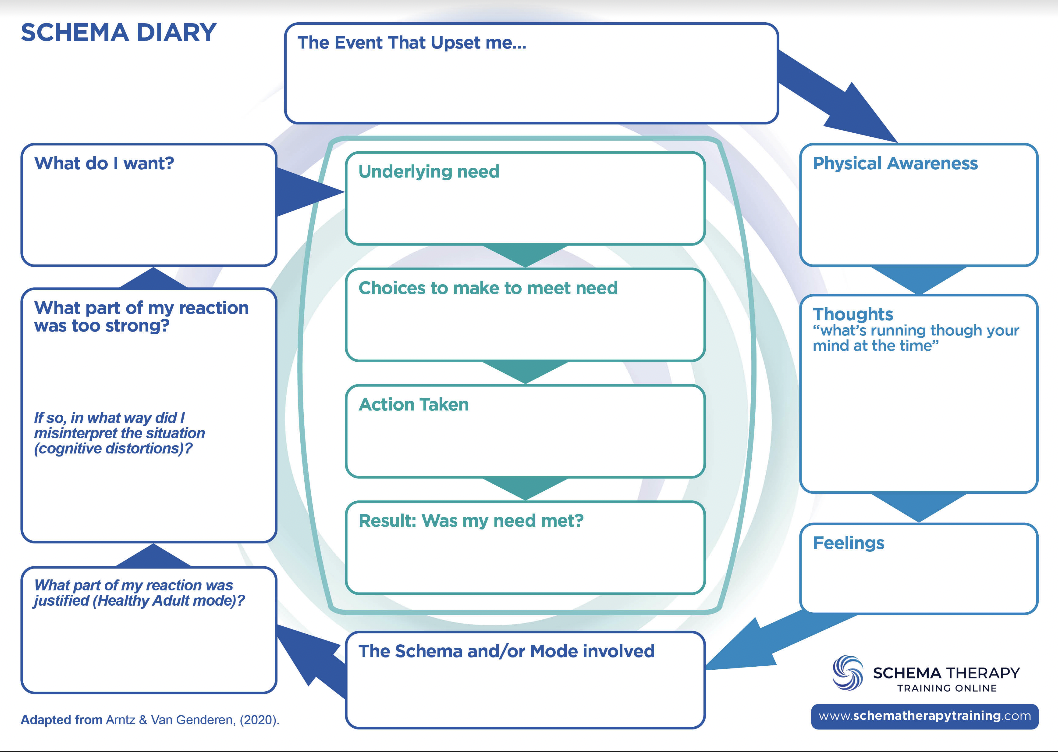
    Schema diary

    Schema diary

    View and download this here.


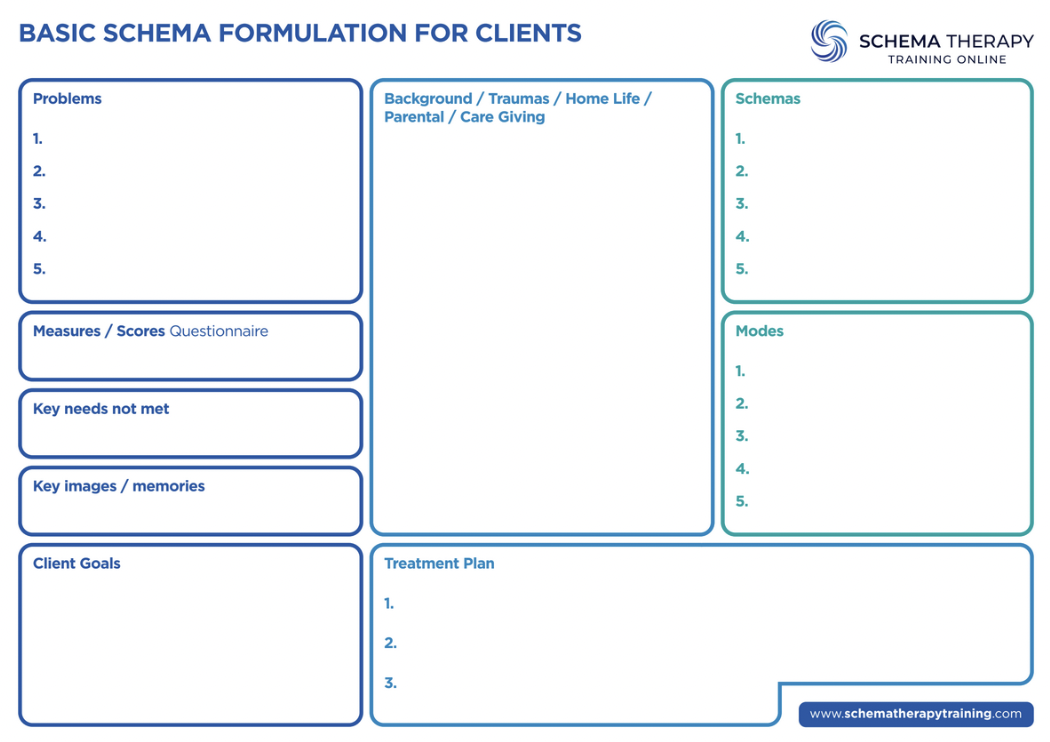
    basic schema formulation for clients

    Schema formulation for clients (basic)

    View and download this here.


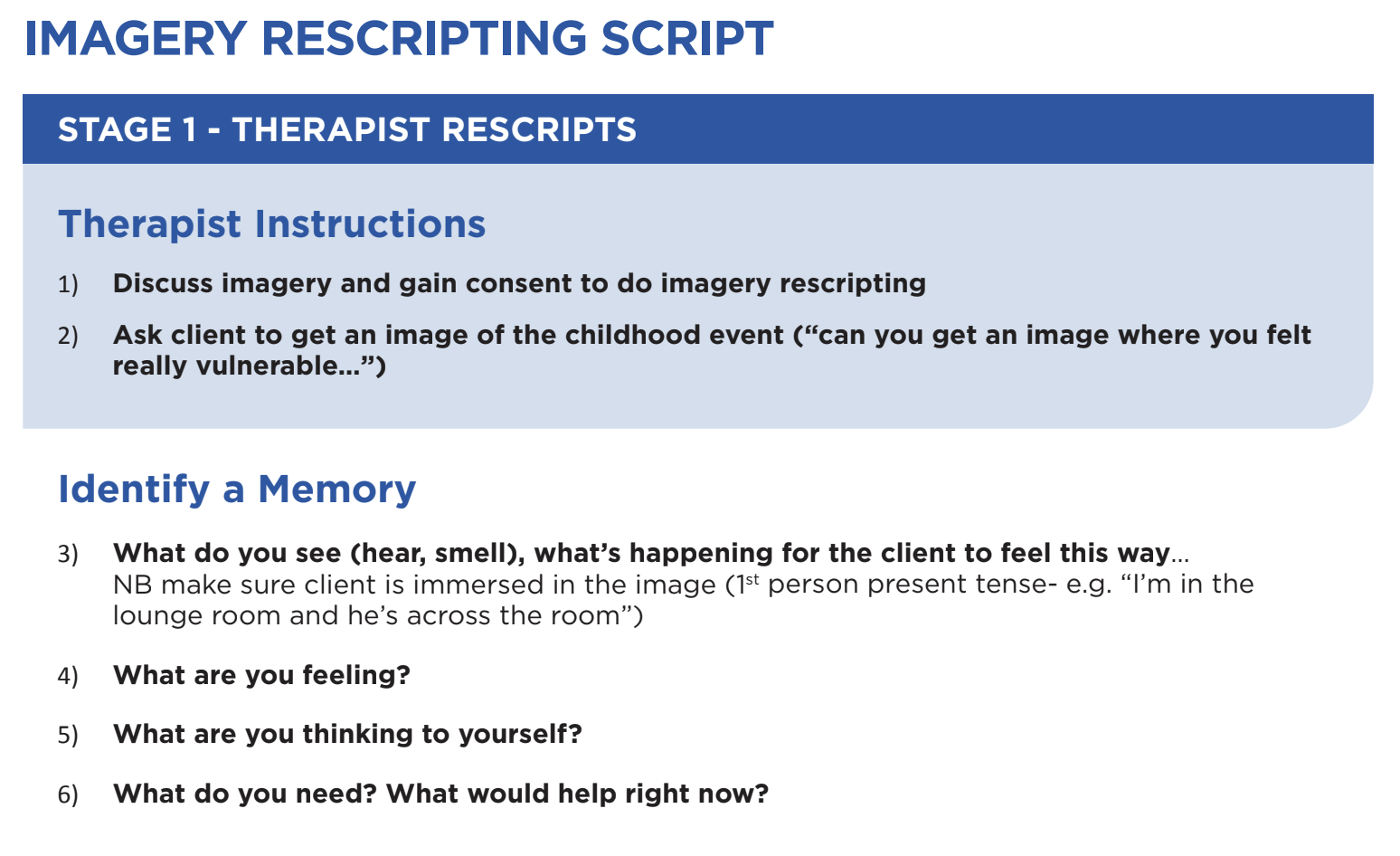
    imagery rescripting script free resource

    Imagery rescripting script

    View and download this here.

  • Schema Therapy Training Online: 2021 Developing Nations Scholarships

    Schema Therapy Training Online: 2021 Developing Nations Scholarships

    Our goal is to improve access to education for developing nations and in practice contexts where there is a disadvantage.

    Schema Therapy is a powerful evidence-based model of psychotherapy that is currently being disseminated across the globe.

    Access to quality training in schema therapy has thus far however been largely limited to those that are privileged enough to live in locations where access is practically and economically possible.

    That is, there is an obvious issue in terms of inclusion for therapists that come from countries where access to such training is not possible or cost-prohibitive. With this in mind, Schema Therapy Training Online is proud to announce a program for Developing Nations Scholarships that will open for application twice yearly for those who come from countries and/or practice contexts (e.g. working with Indigenous populations) where there is a disadvantage in terms of inclusivity or access to the dissemination of professional development.

    Scholarship inclusions (non certification track)

    • Online Course 1: The Basic Model & Treatment Strategies (18-Hours)
    • Online Course 2: The Mode Model for Complex Cases (18-Hours)

    Eligibility Criteria

    Applicants must demonstrate via a short statement and a copy of their resume that they:

    1. Are a qualified mental health professional in their country of residence.
    2. Have a level of disadvantage in access to professional development.
    3. Are in a position to use the training to support their community or the community they are servicing.

    Key Dates for 2021

    • Intake 1: Applications will close 1st June (2021)
    • Intake 2: Applications will close 1st December (2021) **NOW EXTENDED UNTIL 30 January 2022**